


1. Introduction
2. Experimental
2.1. Evaporative Crystallization
2.2. Anti-solvent Crystallization
2.3. Heat treatment
2.4. Characterization
3. Results and discussion
3.1. Effect of Crystallization Method on Phase and Morphology
3.2. Injection Rate Effect in Anti-solvent Crystallization
3.3. Effect of heat treatment
3.4. Impurity Removal, pH and Yield
4. Conclusions
1. Introduction
The rapid expansion of electric vehicles (EVs) and energy storage systems (ESSs) has led to a substantial increase in the demand for high-purity lithium hydroxide (LiOH), a key precursor for high-nickel NCM cathode materials1,2). High-Ni cathode materials with a Ni content of 80 mol% or higher, such as NCM811 and NCA, have attracted considerable attention as next-generation cathode materials for lithium-ion batteries because of their high discharge capacity. However, as the Ni content increases, issues such as structural instability, cation mixing, residual lithium compound formation, and gas evolution become more severe. Therefore, the selection of an appropriate lithium precursor is highly important for the synthesis of high-Ni cathode materials3,4). Conventional lithium carbonate (Li2CO3) exhibits a high decomposition temperature and poor low-temperature reactivity, thereby limiting its reaction with high-Ni precursors that require calcination at relatively low temperatures3). As a result, part of the lithium may not be fully incorporated into the crystal structure and can remain on the surface as residual lithium species, such as Li2O, LiOH, or Li2CO34,5,6). These residual lithium compounds can increase the pH of the electrode slurry, causing premature gelation, and can also promote gas evolution and cell swelling during charge–discharge cycling, thereby deteriorating the safety and cycle life of the battery4). In contrast, lithium hydroxide (LiOH) has a lower melting point and higher reactivity than Li2CO37), allowing lithium to be more readily incorporated into the high-Ni NCM structure even under low-temperature calcination conditions3,4,6). This helps suppress cation mixing between Li+ and Ni2+ and contributes to improved structural purity and crystallinity of the cathode material. In addition, the use of LiOH is advantageous for reducing residual lithium compound formation and improving the physical and electrochemical properties of the final cathode material4). Therefore, LiOH is widely used as a more suitable lithium precursor than Li2CO3 for the synthesis of high-Ni cathode materials such as NCM811 and NCA. In particular, the synthesis of high-nickel NCM cathodes requires stringent control of impurities because lattice defects and residual metal contamination can significantly deteriorate electrochemical performance8,9). Therefore, battery-grade LiOH·H2O must satisfy rigorous specifications, including a LiOH content above 56.5 wt%, transition-metal impurities at the ppm level or lower, magnetic impurities below 100 ppb, a precisely controlled particle size distribution (D50 = 9–13 μm), and strong alkalinity (pH > 13)10,11). To achieve the stable production of high-purity LiOH meeting these requirements, precise control of crystal phase, impurity removal, particle morphology, and particle size is essential. The conversion of lithium carbonate (Li2CO3) recovered from spent lithium-ion batteries into lithium hydroxide has attracted considerable attention as a sustainable approach for securing lithium resources12,13,14). However, conventional evaporative crystallization processes require elevated temperatures and are susceptible to CO2 reabsorption during processing, which promotes the reformation of Li2CO3 and results in the formation of mixed phases15). These limitations hinder the production of high-purity LiOH with the required phase stability for battery applications. As an alternative to overcome these issues, anti-solvent crystallization has attracted increasing attention as a low-temperature purification technique. In this process, an organic anti-solvent is added to a lithium-containing aqueous solution to reduce the solubility of the solute and induce crystallization8,16,17). Since LiOH is highly soluble in water but shows limited solubility in alcohol-based solvents, the selection of an appropriate anti-solvent is critical for the efficient crystallization of LiOH·H2O18). Previous studies have investigated various anti-solvent systems for LiOH·H2O recovery. Lemmens et al. reported that ethanol showed a relatively limited anti-solvent effect, whereas acetone exhibited strong solubility reduction but could undergo side reactions such as aldol condensation under strongly alkaline conditions17). In contrast, isopropanol (IPA) was suggested as a promising anti-solvent because it effectively lowers the solubility of LiOH·H2O while maintaining chemical stability17). He and Xia16) investigated the crystallization kinetics of LiOH in an ethanol anti-solvent system, while Muneer et al.8) proposed an acetone-based process for LiOH·H2O recovery. However, these studies mainly focused on solvent screening, crystallization kinetics, or acetone-based recovery under controlled solution conditions. Therefore, the applicability of anti-solvent crystallization to actual recycled lithium feedstocks, where multicomponent impurities may affect product purity and crystallization behavior, remains insufficiently understood. In this study, IPA was selected as the anti-solvent considering the low solubility of LiOH·H2O in IPA, chemical stability, and process applicability. Furthermore, the IPA-based anti-solvent crystallization process was compared with conventional evaporative crystallization to evaluate phase purity, impurity removal, particle characteristics, and product yield during the production of battery-use LiOH from recovered Li2CO3.
2. Experimental
In this study, battery-grade lithium hydroxide (LiOH) was synthesized using two different approaches: evaporative crystallization and anti-solvent crystallization. Lithium carbonate (Li2CO3) recovered via a supercritical process and calcium hydroxide (Ca(OH)2) were employed as the starting materials. Fig. 1 presents the SEM images of the Li2CO3 precursor recovered through the supercritical process. The Li2CO3 precursor consisted of irregularly shaped particles with sizes in the micrometer range, exhibiting both plate-like and blocky crystal morphologies. In addition, fine particles were observed on the surfaces of some crystals.
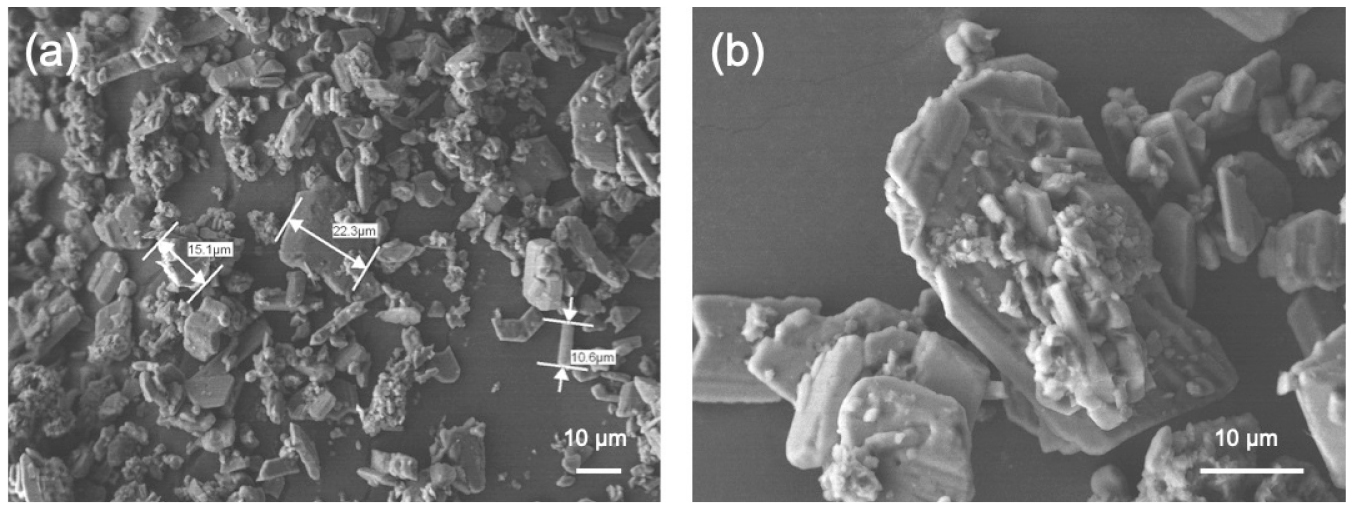
Table 1 presents the concentrations of metallic impurities present in the recovered Li2CO3 powder. Among the detected elements, Na exhibited the highest concentration at 162 mg/L, followed by P, Ca, and Si at 31.9, 4.87, and 4.47 mg/L, respectively. In addition, trace amounts of Mg, Al, Co, W, Cu, Sn, Mo, Zr, Zn, Fe, and Ti were detected. In contrast, Ni, Mn, and Cr were not detected within the analytical detection limits.
Table 1.
Concentrations of impurities in the raw powder material (Li2CO3)
First, the recovered lithium carbonate was dissolved in deionized water heated to 60 ℃, followed by the addition of calcium hydroxide to induce the precipitation of calcium carbonate (CaCO3). The reaction mixture was continuously heated and stirred for a sufficient period to ensure complete reaction. Subsequently, the generated CaCO3 precipitate was removed by vacuum filtration. The resulting filtrate was then stored in a sealed container to prevent its reaction with atmospheric CO2, which could lead to the reformation of lithium carbonate.
2.1. Evaporative Crystallization
A small amount of LiOH·H2O seed crystals was added to the filtrate to promote the growth of Li+ and OH- ions into lithium hydroxide crystals. The seeded solution was subsequently heated to gradually evaporate the solvent, and LiOH crystals were formed as the solution concentration increased. The resulting crystals were stored in a sealed container to prevent the adsorption of moisture and CO2 from the atmosphere.
2.2. Anti-solvent Crystallization
For the anti-solvent crystallization process, isopropanol (IPA) was employed as the anti-solvent to induce the crystallization of LiOH·H2O from the aqueous LiOH solution. IPA was selected based on its ability to effectively reduce the solubility of LiOH·H2O and its relatively high chemical stability, as discussed in the Introduction. The IPA volume was fixed at approximately four times that of the filtrate. IPA was placed in a flask and heated to 60–70 ℃. To induce preliminary nucleation, a small amount of the filtrate was added to the preheated anti-solvent. Subsequently, a trace amount of LiOH·H2O seed crystals was introduced to promote the nucleation of lithium hydroxide. After allowing nucleation to proceed for approximately 10–15 min, the remaining filtrate was injected into the anti-solvent at two different feed rates of 2 mL/min and 6 mL/min. Following complete addition of the filtrate, the suspension was stirred for 1 h to facilitate crystal growth. The resulting lithium hydroxide crystals were then recovered by vacuum filtration.
2.3. Heat treatment
Both the evaporative crystallization and anti-solvent crystallization processes were conducted under atmospheric conditions, and LiOH·H2O seed crystals were employed to promote crystal growth. As a result, the final products were predominantly obtained in the hydrated form of LiOH·H2O. To convert the hydrate into anhydrous LiOH, the dried LiOH·H2O powder was transferred to an alumina crucible and heat-treated at 100–120 ℃ for approximately 1 h. During the heat-treatment process, the crucible lid was kept partially open rather than completely sealed to facilitate the removal of water of crystallization.
2.4. Characterization
The crystal phase, morphology, particle size distribution, and impurity removal efficiency of the synthesized products were characterized using field-emission scanning electron microscopy (FE-SEM, JSM-7500F, JEOL Ltd., Japan), X-ray diffraction (XRD, D8 Focus, Bruker, Germany), Fourier-transform infrared spectroscopy (FT-IR, Nicolet iS50, Thermo Scientific, USA), particle size analysis (PSA, Nano Plus HD, Micromeritics, USA), and inductively coupled plasma optical emission spectroscopy (ICP-OES).
3. Results and discussion
3.1. Effect of Crystallization Method on Phase and Morphology
Fig. 2 presents the SEM images of the samples synthesized via evaporative crystallization and anti-solvent crystallization. The sample obtained by evaporative crystallization exhibited a heterogeneous morphology consisting of plate-like, blocky, and dendritic crystals. In addition, the particles showed a relatively broad size distribution and significant variations in both shape and size. In contrast, the sample synthesized by anti-solvent crystallization was predominantly composed of fine particles with comparatively uniform size and morphology. Although some degree of particle agglomeration was observed, the anti-solvent derived sample exhibited a simpler and more homogeneous morphological distribution than that produced by evaporative crystallization.
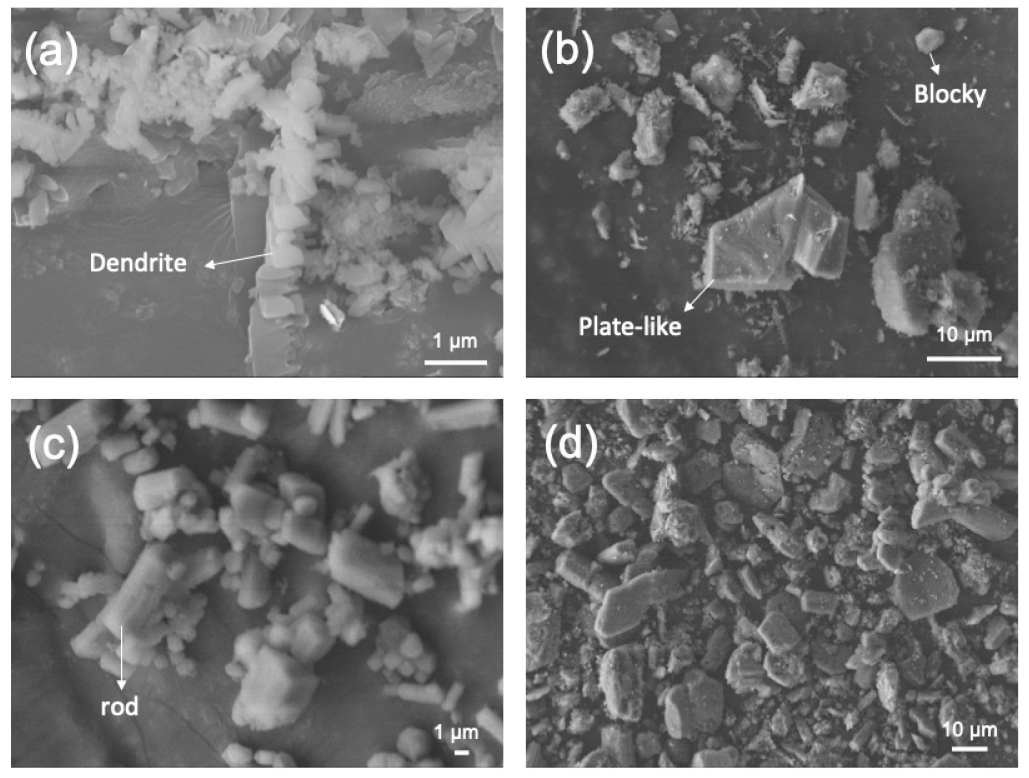
The observed morphological differences can be attributed to variations in the supersaturation generation mechanism and the resulting nucleation and crystal growth behavior associated with each crystallization process19). In evaporative crystallization, supersaturation gradually increases as the solvent is slowly removed, creating a growth-controlled condition in which crystal growth predominates over nucleation. Consequently, relatively larger particles are formed compared to those produced by anti-solvent crystallization, exhibiting plate-like, blocky, rod-like, and dendritic morphologies. This behavior can be attributed to the preferential development of thermodynamically stable crystal facets and crystal growth along directions that minimize surface energy during the crystallization process20). In contrast, anti-solvent crystallization induces a rapid decrease in solubility upon anti-solvent addition, resulting in an instantaneous increase in supersaturation16,17). Under these conditions, a nucleation-controlled condition is established, leading to the simultaneous formation of a large number of nuclei. As a result, relatively fine particles are produced, consisting of irregular rod-like and fine plate-like structures. Furthermore, the particles were observed as agglomerates of numerous primary particles. This phenomenon can be explained by the fact that the nucleation rate exceeds the crystal growth rate under conditions of rapid supersaturation generation.
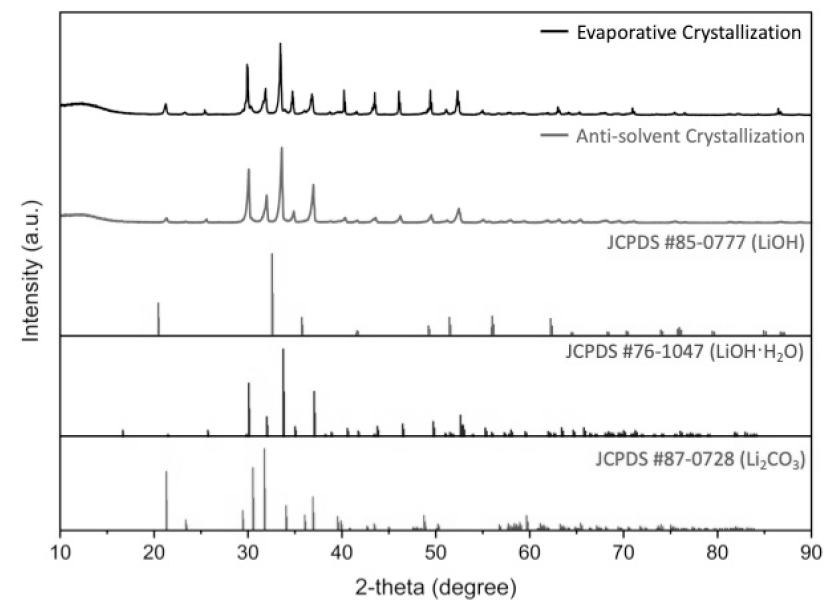
Fig. 3 presents the XRD patterns of the samples synthesized by different crystallization methods. In the case of evaporative crystallization, the coexistence of LiOH·H2O, Li2CO3, and LiOH phases was observed. This result is attributed to partial carbonation caused by the reaction of the solution with atmospheric CO2 during the evaporation process. The formation of this multiphase structure is also consistent with the SEM observations shown in Fig. 2, where crystals with diverse morphologies were identified. In contrast, the sample prepared by anti-solvent crystallization exhibited a single-phase LiOH·H2O structure, which is in good agreement with the relatively uniform particle morphology observed in the SEM images.
Equations (1), (2), (3) describe the conversion of lithium carbonate into lithium hydroxide and lithium hydroxide monohydrate, as well as the formation of lithium carbonate through reactions involving lithium ions in solution. These reactions provide a chemical basis for the coexistence of multiple phases during the conversion of lithium carbonate to lithium hydroxide.
Based on these results, the formation of multiple phases during evaporative crystallization can be primarily attributed to the relatively large liquid–air interfacial area and the prolonged processing time, both of which facilitate the reaction with atmospheric CO2. To verify this interpretation, an additional recrystallization experiment was conducted using LiOH·H₂O dissolved in water. The recrystallization process was performed using both evaporative crystallization and anti-solvent crystallization under the same conditions for comparison.
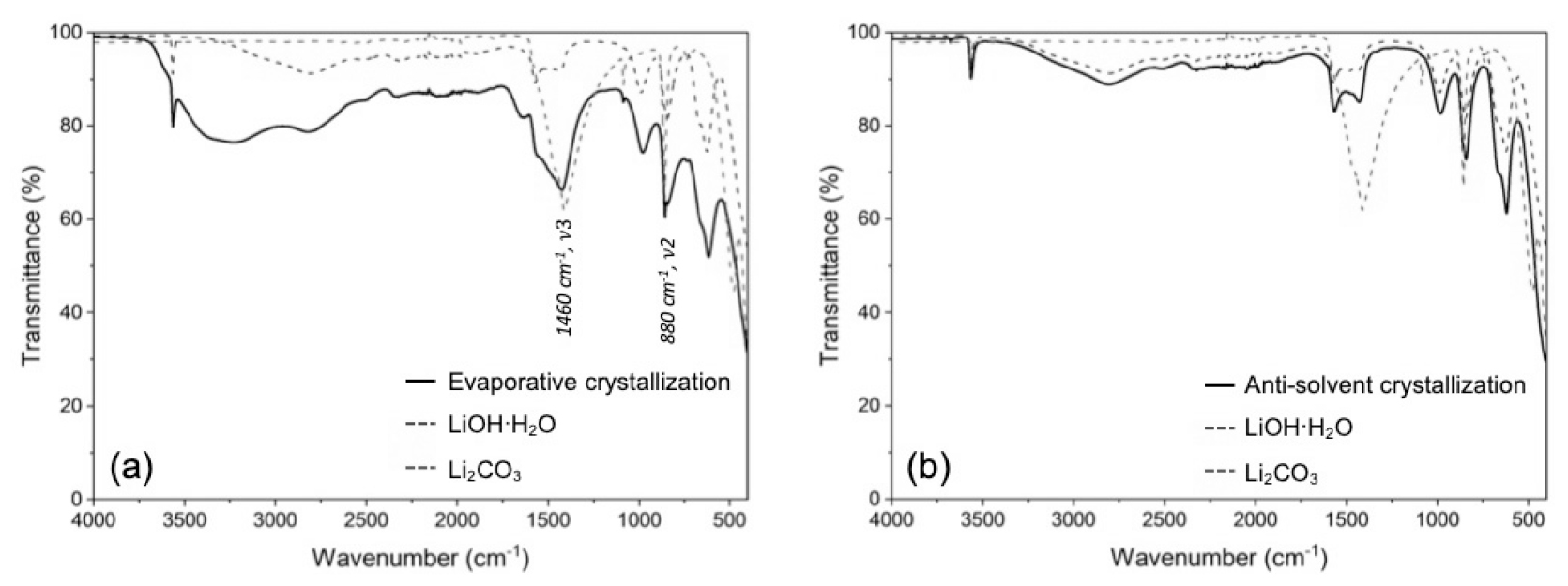
The corresponding results are presented in Fig. 4. Fig. 4(a) shows the FT-IR spectrum of the sample recrystallized via evaporative crystallization. In addition to the characteristic peaks of LiOH·H2O, distinct carbonate-related peaks were also observed. In particular, the absorption band near 1460 cm-1 corresponds to the asymmetric stretching vibration (ν3) of the carbonate ion (CO32-), while the band around 880 cm-1 is assigned to the out-of-plane bending vibration (ν2)21,22). These bands originate from the vibrational modes of the C–O bonds within the carbonate ion, indicating the partial formation of Li2CO3 during the evaporative crystallization process.
In contrast, as shown in Fig. 4(b), the FT-IR spectrum of the sample recrystallized via anti-solvent crystallization did not exhibit a pronounced carbonate-related band near 1460 cm-1. Instead, the spectrum was dominated by the characteristic absorption bands of LiOH·H2O. This result indicates that the formation of Li2CO3 was effectively suppressed during the anti-solvent crystallization process, allowing recrystallization to proceed predominantly through the formation of LiOH·H2O. These findings suggest that exposure to atmospheric CO2 during evaporative crystallization can promote the formation of Li2CO3, thereby contributing to the development of the multiphase structure observed in the XRD analysis15).
3.2. Injection Rate Effect in Anti-solvent Crystallization
The effect of supersaturation generation rate, controlled by the filtrate injection rate, on crystal formation behavior was investigated. Fig. 5(a–c) present the SEM images and particle size distribution results of the LiOH·H2O sample synthesized at a high injection rate. The sample exhibited relatively fine and irregularly shaped particles, with a median particle size (D50) of 9.60 μm and an average particle size of 13.06 μm. This behavior can be attributed to the rapid increase in supersaturation upon mixing of the anti-solvent and filtrate, which induced the simultaneous formation of a large number of nuclei. Consequently, the nuclei experienced limited crystal growth due to rapid nucleation, resulting in the formation of finer particles19,23,24). The XRD pattern shown in Fig. 5(d) confirmed the formation of a stable single-phase LiOH·H2O structure, while no diffraction peaks corresponding to Li2CO3 were detected. This result indicates that a high injection rate has little influence on the phase composition of the product, although it significantly affects particle size and morphology.
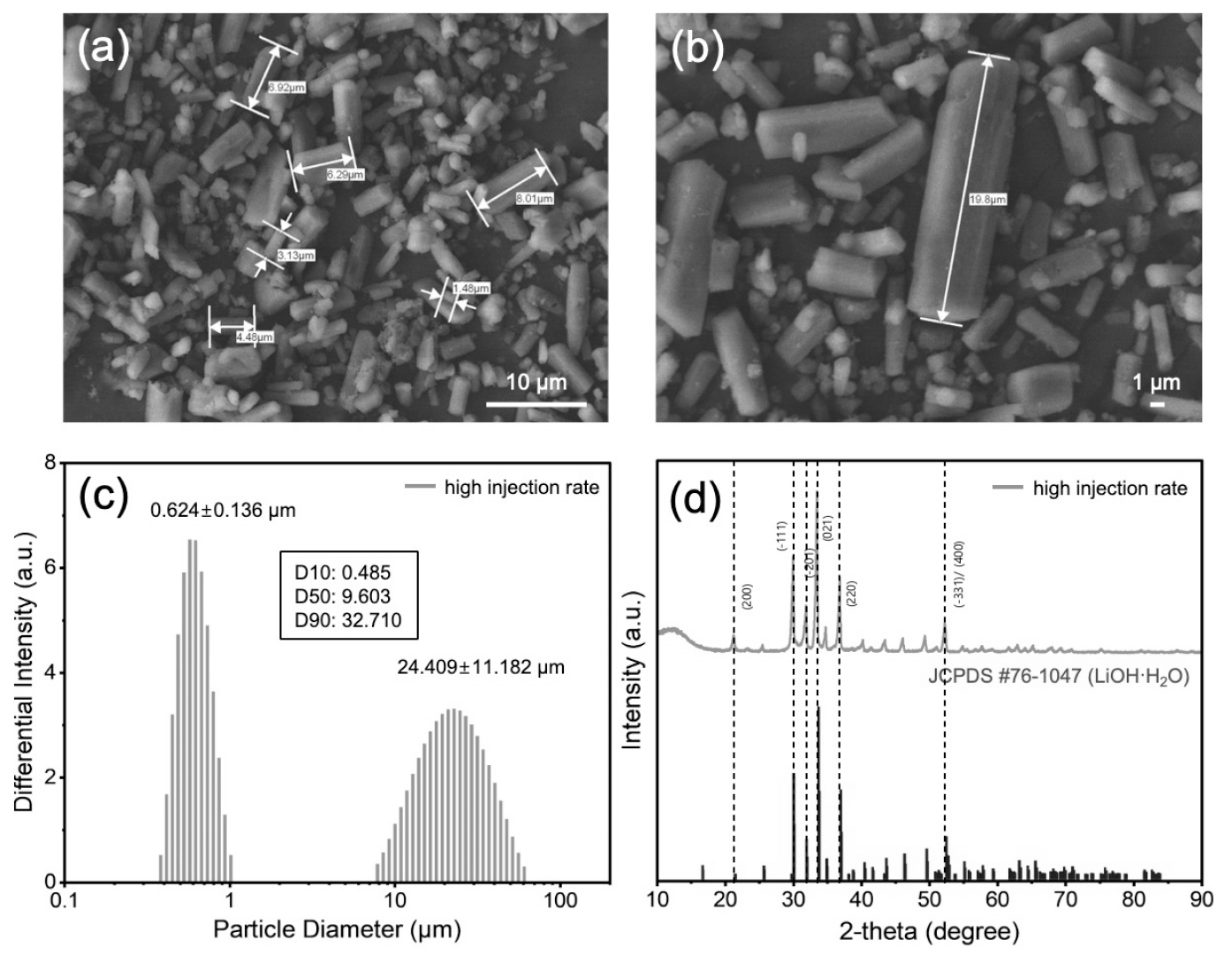
Fig. 6(a–c) present the SEM images and particle size distribution results of the LiOH·H2O sample synthesized at a low injection rate. The sample exhibited larger and more uniform particles, with a median particle size (D50) of 19.7 μm and an average particle size of 22.7 μm. This behavior can be attributed to differences in the initial nucleation rate arising from the injection rate. In particular, under a low injection rate, excessive formation of fine nuclei was suppressed, allowing individual crystals sufficient time and solute availability for continued growth19,23,24). Consequently, larger particles with a more uniform size distribution were obtained. As shown in Fig. 6(d), XRD analysis also confirmed the formation of a single-phase LiOH·H2O structure, and no significant difference in phase composition was observed between the two injection-rate conditions.
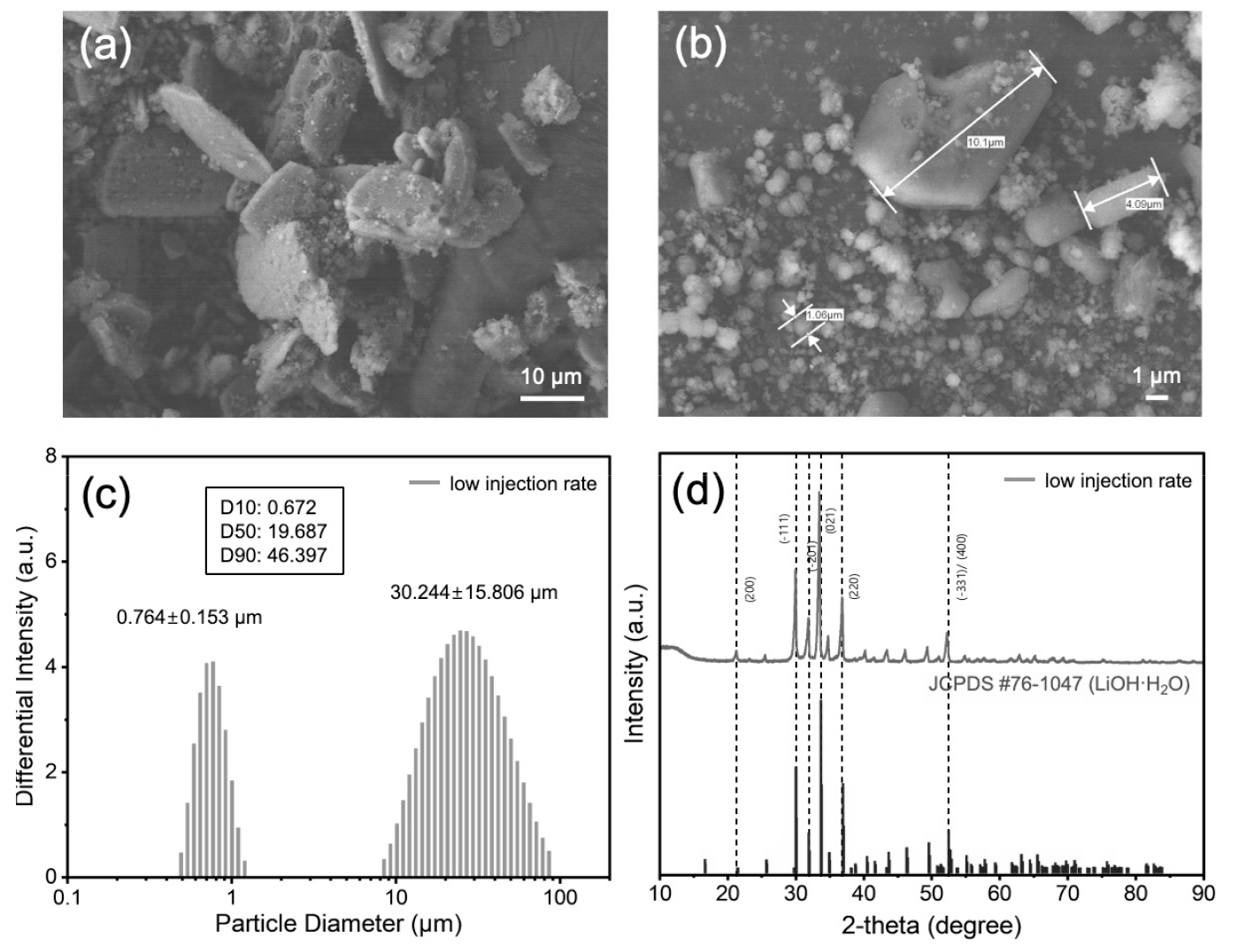
These results indicate that the injection rate has little influence on the phase composition of the product, but plays a critical role in determining particle size and morphology by controlling the rate of supersaturation generation and, consequently, the balance between nucleation and crystal growth25).
3.3. Effect of heat treatment
Fig. 7 shows the XRD and FT-IR analysis results of the LiOH·H2O samples before and after heat treatment. Fig. 7(a) presents the XRD pattern of the sample heat-treated at 100–120 ℃. After heat treatment, the main diffraction peaks of LiOH·H2O decreased, while diffraction peaks corresponding to anhydrous LiOH were observed, confirming the phase transformation from LiOH·H2O to anhydrous LiOH. In addition, FT-IR analysis was performed as a supplementary method to examine the reduction of water in LiOH·H2O. In the FT-IR spectra, the broad water-related band in the 2800–3400 cm-1 region is assigned to the H2O O–H stretching vibration, while the peak near 3550 cm-1 corresponds to the OH- stretching vibration26). After heat treatment, changes in these peaks were observed, indirectly supporting the reduction of crystal water or residual moisture in LiOH·H2O. However, because FT-IR analysis has limitations in quantitatively evaluating water content, XRD was used as the main evidence for confirming the phase transformation, while FT-IR was used as supplementary qualitative evidence in this study.
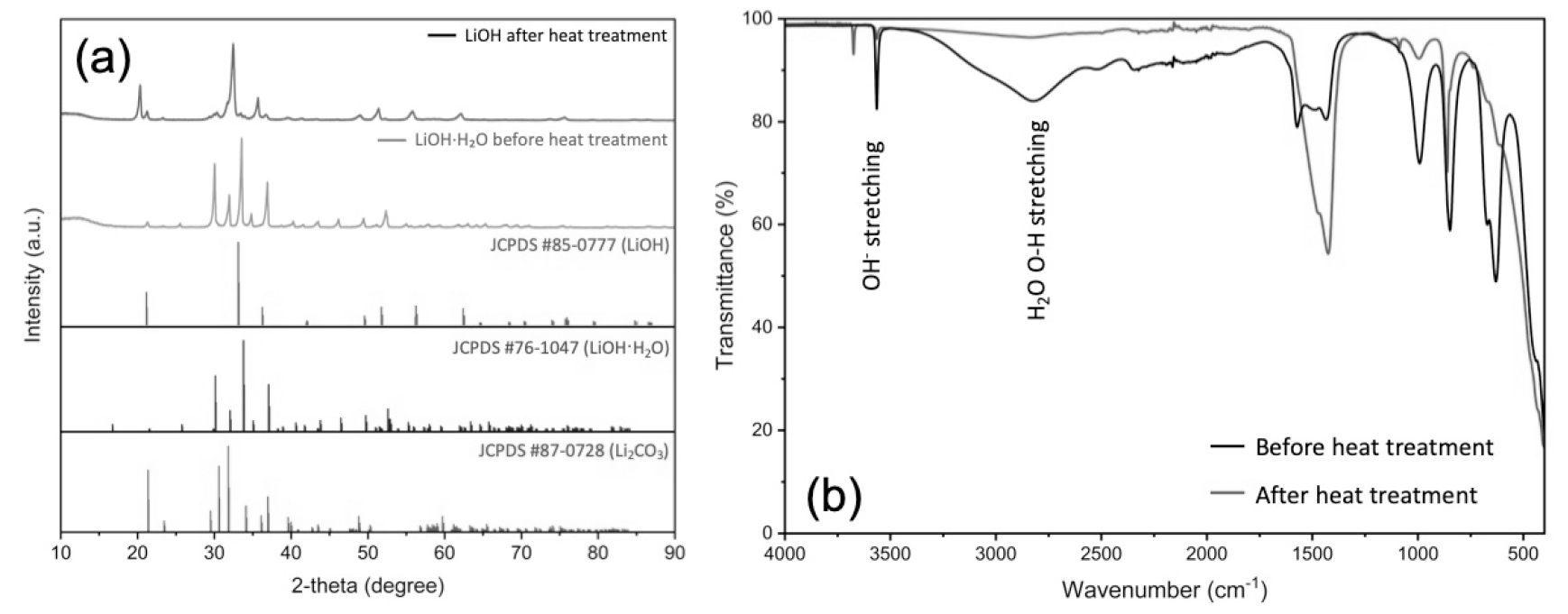
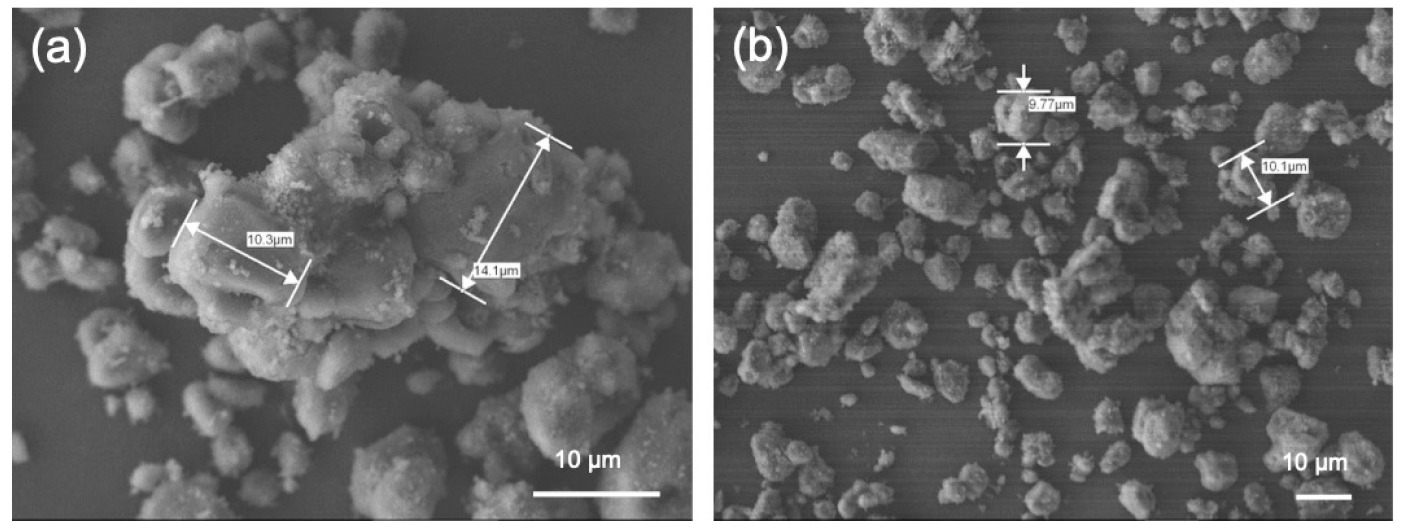
Fig. 8 presents the SEM images of the samples before and after heat treatment. The as-prepared LiOH·H2O sample exhibited an irregular layered and agglomerated morphology, whereas the heat-treated sample showed relatively smaller particles with a denser packing arrangement27). These morphological changes can be attributed to the dehydration of LiOH·H2O, which leads to the formation of anhydrous LiOH and is accompanied by changes in particle size and surface characteristics.
3.4. Impurity Removal, pH and Yield
Table 2 shows the concentrations of impurity elements in the raw Li2CO3 powder used in this study and in the purified LiOH·H2O powder obtained through the anti-solvent crystallization process. The measured impurity concentrations were compared with the impurity specifications for LiOH·H2O provided in the report published by Fastmarkets11). As a result, all measured impurity element concentrations in the LiOH·H2O produced in this study were found to satisfy the corresponding specification limits. This indicates that the anti-solvent crystallization process can effectively remove major impurity elements while producing LiOH·H2O with a purity level suitable for use as a battery raw material.
Table 2.
Impurity concentrations of raw Li2CO3 and purified LiOH·H2O powders
| Element | Raw Li2CO3 Powder (mg/L) | Purified LiOH·H2O Powder (mg/L) |
| Fe | 0.023 | 0.010 |
| Co | 0.546 | N.D. |
| Ni | N.D. | N.D. |
| Na | 162 | 3.40 |
| Ca | 4.87 | 1.00 |
| P | 31.9 | N.D. |
| Si | 4.47 | 1.50 |
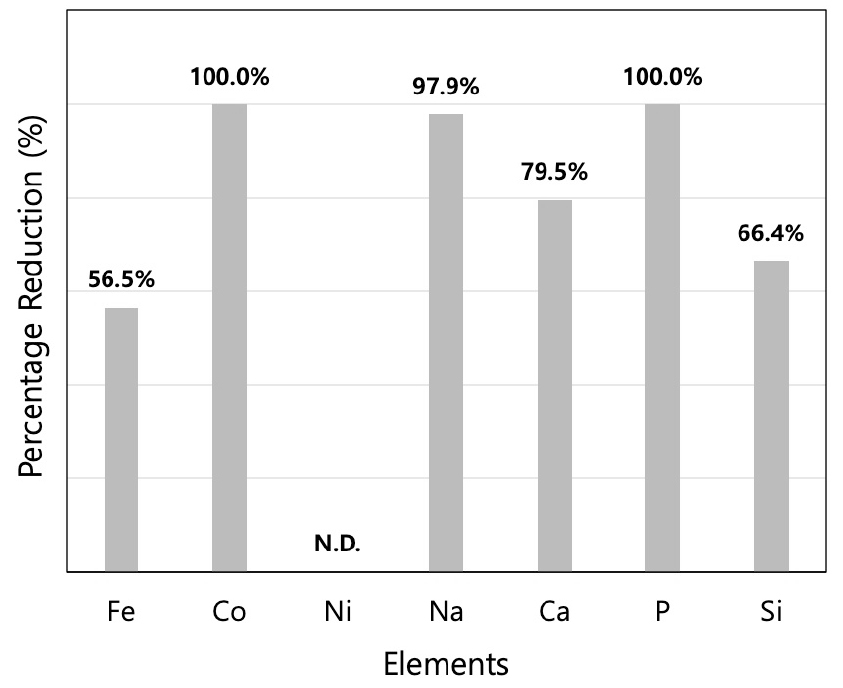
Fig. 9 shows the removal efficiencies of major impurity elements calculated based on the ICP-OES results presented in Table 2. The concentrations of Fe and Si decreased by 56.5% and 66.4%, respectively, while Na showed a high removal efficiency of 97.9%. Co and P exhibited removal efficiencies of 100.0%, indicating that they were effectively removed during the synthesis process. In contrast, Ni was excluded from the removal efficiency calculation because it was below the detection limit (N.D.) in both the initial and final samples. In the case of Ca, although a slight excess of Ca(OH)2 was added relative to Li2CO3 to facilitate the reaction with carbonate ions, the Ca concentration decreased from an initial value of 4.87 mg/L to approximately 1.00 mg/L, corresponding to a removal efficiency of 79.5%. This indicates that most of the excess Ca species were effectively removed through CaCO3 precipitation and filtration. These results demonstrate that the present process can effectively reduce major impurity elements such as Fe, Co, Na, Ca, P, and Si, confirming the successful synthesis of high-purity LiOH·H2O through anti-solvent crystallization.
The pH of the synthesized LiOH·H2O solution was measured to be approximately 14, indicating strong alkalinity. This result is consistent with the characteristic properties of high-purity lithium hydroxide.
Furthermore, the final yield of LiOH obtained through the anti-solvent crystallization process under the high injection rate condition was calculated to be approximately 76.5%. This result suggests that the anti-solvent-based process can effectively mitigate the carbonation issues associated with evaporative crystallization while achieving the recovery efficiency and product quality required for the production of battery-grade LiOH. In this study, the final yield of the evaporative crystallization process was not separately calculated. This is because the product obtained under the evaporative crystallization conditions was confirmed to be a mixed phase in which the starting material, Li2CO3, was partially reformed, rather than single-phase LiOH·H2O. Therefore, if the LiOH recovery yield were calculated based on the total mass of the obtained product, the Li2CO3 fraction, rather than only LiOH, would also be included, potentially leading to an overestimation of the actual LiOH yield. Accordingly, instead of quantitatively reporting the final yield of the evaporative crystallization process, this study demonstrated, based on XRD phase analysis, that the anti-solvent crystallization process can recover LiOH·H2O more selectively.
4. Conclusions
In this study, the evaporative crystallization and anti-solvent crystallization methods were systematically compared to evaluate the synthesis mechanism, crystal structure, morphological characteristics, impurity removal performance, and product yield of battery-grade lithium hydroxide (LiOH). The results revealed that the sample prepared by evaporative crystallization exhibited a multiphase structure consisting of LiOH·H2O, Li2CO3, and other phases, indicating limitations in achieving high compositional purity. In contrast, the sample synthesized via anti-solvent crystallization consistently exhibited a single-phase LiOH·H2O structure. Morphological analysis further showed that the product was composed of agglomerated rod-like and plate-like particles with fine dimensions.
In the anti-solvent crystallization process, the injection rate was identified as a key parameter governing crystal growth behavior. At a high injection rate of 6 mL/min, rapid supersaturation was generated immediately upon addition of the filtrate to the anti-solvent, leading to the simultaneous formation of a large number of fine nuclei. Consequently, the product predominantly consisted of aggregates of small particles. In contrast, at a low injection rate of 2 mL/min, supersaturation developed more gradually, suppressing excessive nucleation and favoring crystal growth. As a result, larger particles with a more uniform size distribution were obtained.
During the heat-treatment process, XRD analysis confirmed the phase transformation of LiOH·H2O into anhydrous LiOH through a dehydration reaction. SEM observations revealed that the particles underwent structural rearrangement during dehydration, resulting in a denser and more agglomerated morphology accompanied by particle shrinkage. Furthermore, compositional analysis demonstrated that major impurities, including Fe, Na, and Si, were reduced with efficiencies ranging from 56% to as high as 98%. The final product exhibited a pH value of approximately 14, confirming the successful synthesis of high-purity LiOH. Notably, anti-solvent crystallization under the high injection rate condition achieved a high product yield of approximately 76.5%, indicating the potential of this process to mitigate the carbonation issue associated with evaporative crystallization.
Overall, this study confirmed the carbonation and mixed-phase formation issues caused by CO2 reabsorption during evaporative crystallization and demonstrated the potential of anti-solvent crystallization as an alternative process to overcome these limitations. In addition, it was confirmed that the particle size and morphology of LiOH·H2O can be controlled by adjusting the anti-solvent injection rate, and that LiOH·H2O can be converted into anhydrous LiOH through heat treatment. The LiOH·H₂O produced in this study was found to satisfy the battery raw material specifications reported in selected references in terms of yield, impurity concentration, and particle size. However, further studies are required to improve the uniformity of particle morphology, suppress the reformation of Li2CO3 during heat treatment, and quantitatively control and evaluate the water content. Therefore, future work should focus on refining the anti-solvent crystallization conditions, washing and drying conditions, and heat-treatment atmosphere to further improve the reproducibility and quality stability of the production process for high-purity LiOH·H2O and anhydrous LiOH. These results can serve as fundamental data for developing a production process for battery-use LiOH from recovered Li2CO3.